
Efficacy Evaluation of Inflammatory Bowel Disease (IBD) Using Intestinal Organoid
Inflammatory bowel disease (IBD) is a complex disorder caused by genetic and environmental factors. iPSC- or patient-derived 3D tissue-based efficacy evaluation models are novel in vitro models that may better predict clinical efficacy in IBD.
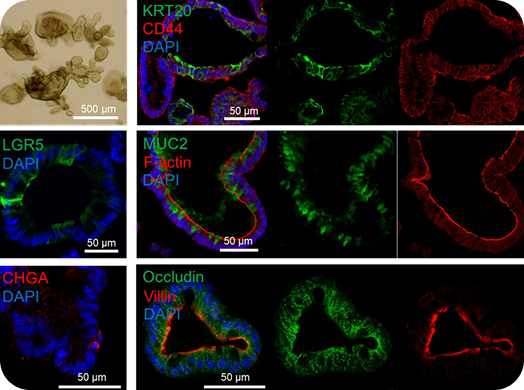
Cultured Patient-Derived Intestinal Organoids
Model Overview (Bioanalytical method validation)
iPSC-derived intestinal organoids (normal intestinal organoids purchased from Sigma-Aldrich) and patient-derived intestinal organoids (developed through collaborative research with Professor Tae Il Kim of the Department of Gastroenterology at Yonsei University Severance Hospital) were cultured based on Korea Research Institute of Chemical Technology (KRICT) Standard Operating Procedures SOP. KRICT. #104 (“Generation of iPSC-Derived Inflammatory Bowel Disease Models and Measurement of Cytokine Secretion”) and SOP. KRICT. #105 (“Generation of Patient-Derived Intestinal Organoid Inflammatory Models and Efficacy Evaluation Methods for Inflammatory Bowel Disease”), developed with support from the Ministry of Trade, Industry and Energy drug development platform program, and were confirmed to be applicable for efficacy evaluation of clinically prescribed drugs.
Simplified Efficacy Evaluation Process
This drug evaluation technology utilizes in vitro models with higher physiological relevance than conventional two-dimensional cell-based assays. It employs alternative models using human-derived tissues in place of animal testing and enables analysis of drug responsiveness in patient groups with diverse clinical backgrounds.
iPSC-Derived

Patient-derived
-
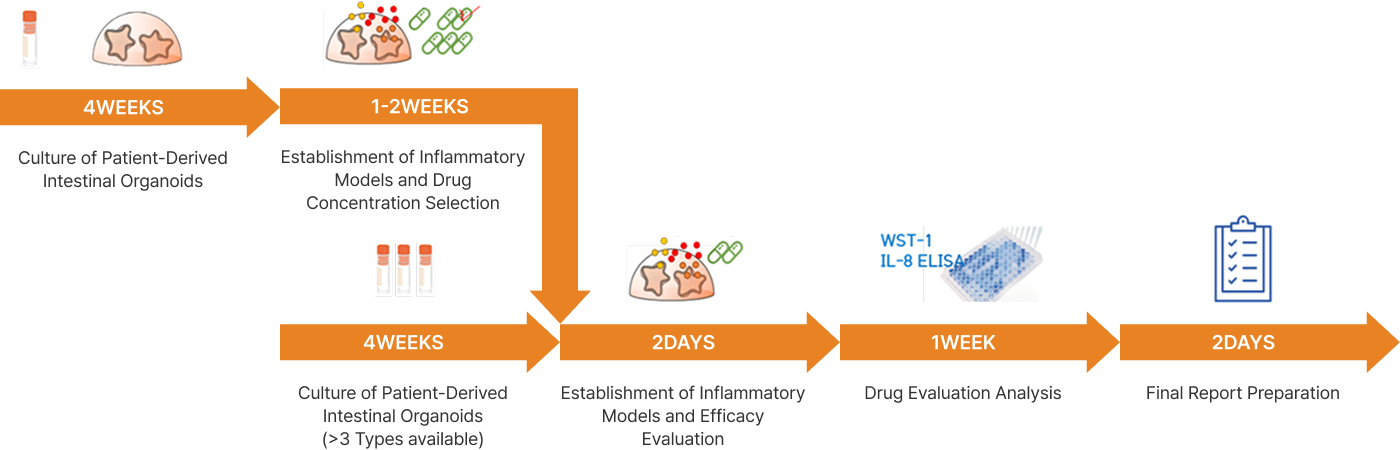
Drug Evaluation Timeline
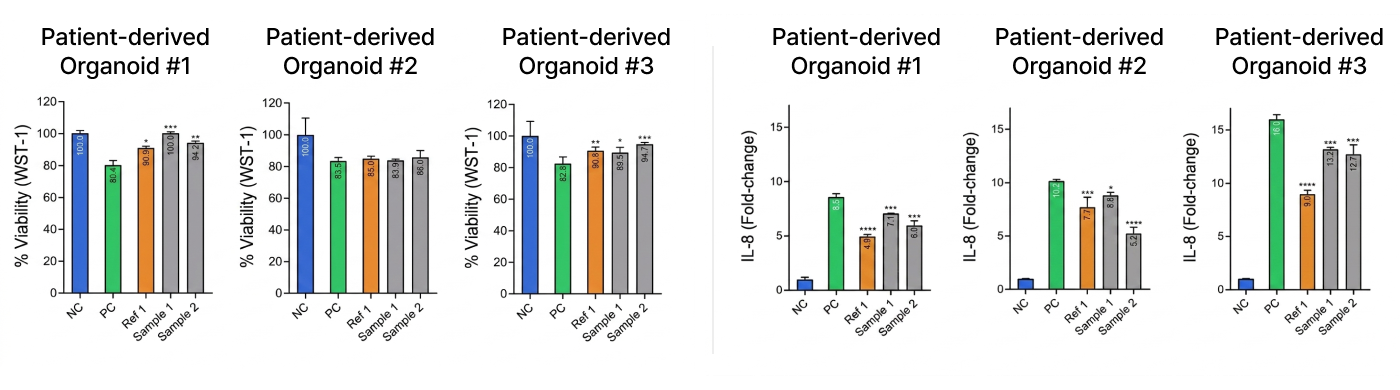
Type of Intestinal Organoids iPSC-Derived Patient-derived Parameters Cell viability of intestinal organoids and reduction of inflammatory cytokine (IL-8) secretion in response to the test drug Required Amount of Test Drug 10 mg or 100 μL of a 50 mM DMSO solution Timeline 5 ~ 6 weeks ~ 8 weeks 3 – 4 weeks with prior organoid culture preparation -
Test Groups
Group (Per 1 Type of Organoid) Model Drug dosage N NC (Negative Control) Normal - 5 ~ 6 PC (Positive Control) IBD + DMSO - 5 ~ 6 Reference 1 (5–ASA) IBD + reference 200 μM 5 ~ 6 Reference 2 (Infliximab) IBD + reference 35 μM 5 ~ 6 Test drug 1 IBD + drug TBD 5 ~ 6 Test drug 2 IBD + drug TBD 5 ~ 6 -
Representative Analysis Results
-
Other Information
A total of 13 types of patient-derived intestinal organoids are available for testing (8 ulcerative colitis types and 5 Crohn’s disease types).
Reference drugs may be added or modified depending on the mechanism of action of the test drug.
Up to 12 test drugs can be evaluated per set, including control and reference groups.